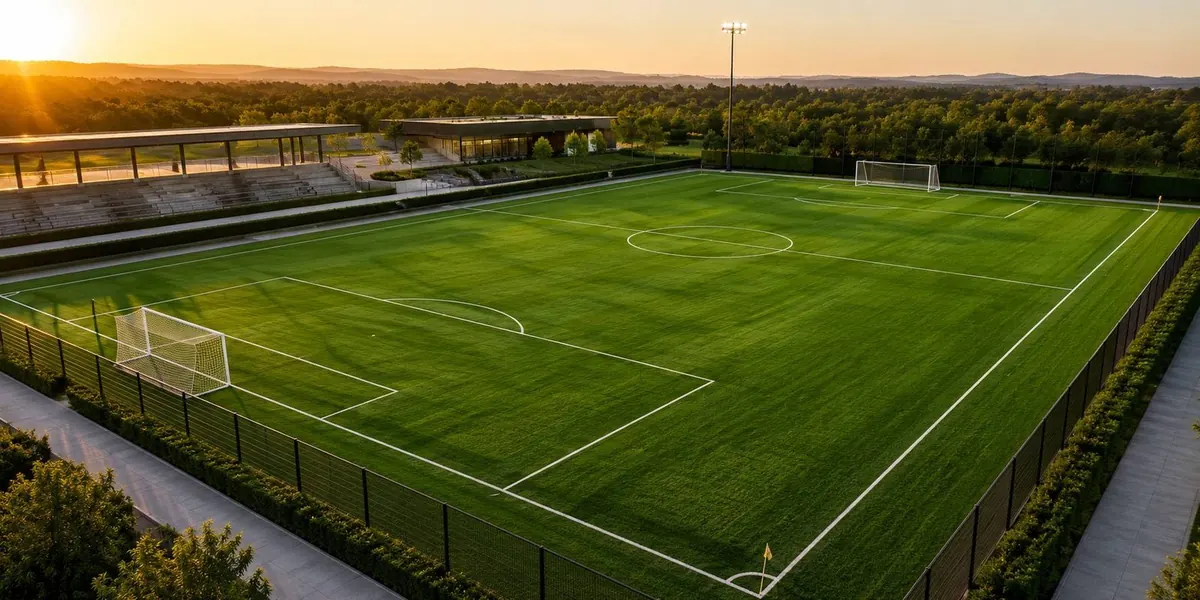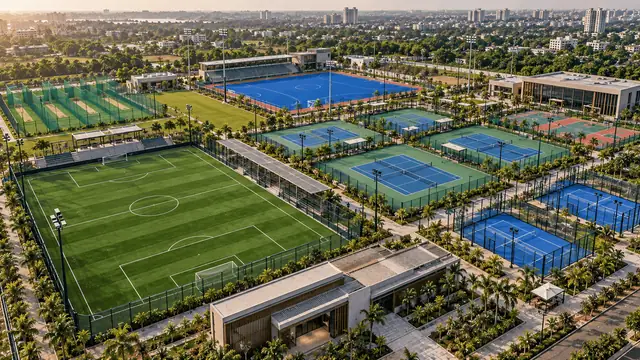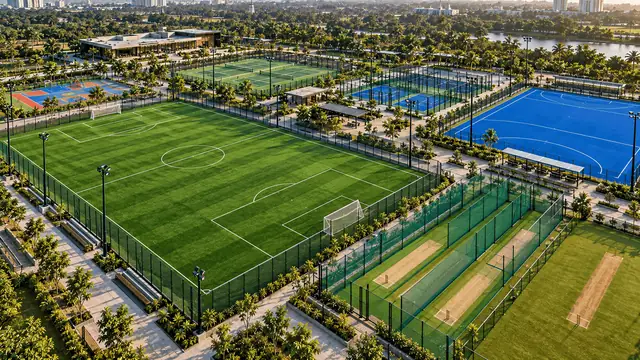
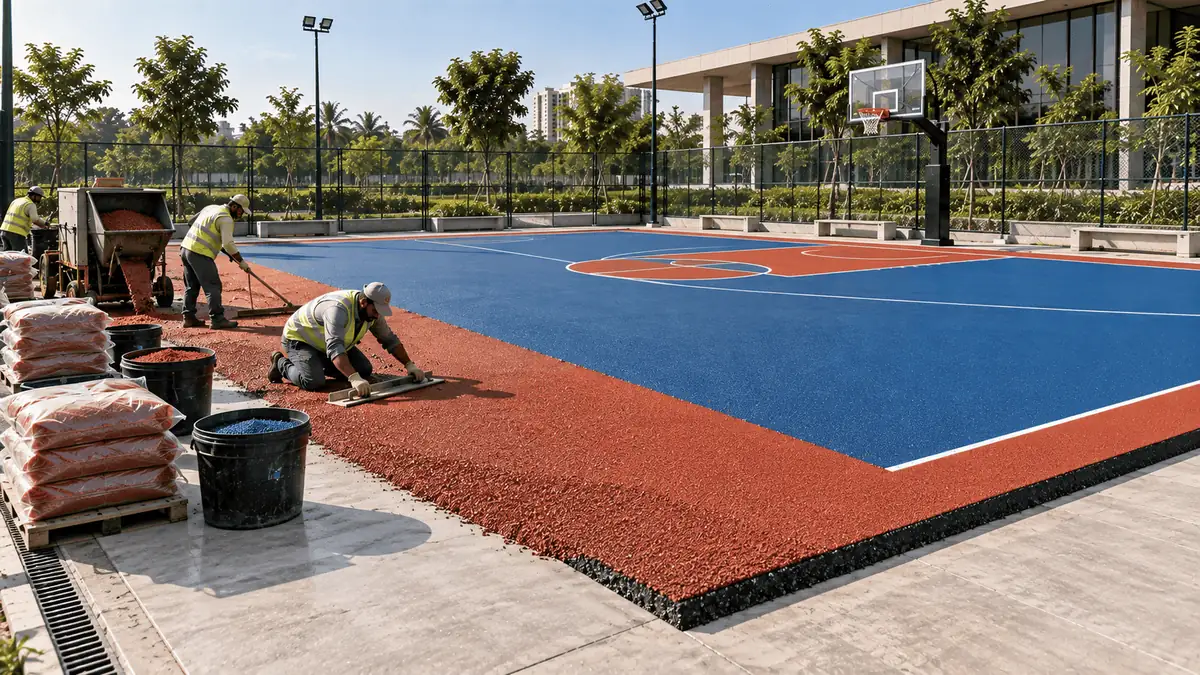
The order matters more than the products. Every step below depends on the one before it. A drain laid after the sub-base is compacted is a drain that does not work. Lines inlaid before the infill settles are lines that wander. Build it in this order and the ground lasts ten years.
1. Survey and brief.
Measure the plot, shoot levels, find where water leaves the site today, check access for a tipper and a roller. Decide the format and the run-off. Decide the hours the ground will play, because that sets the dtex tier. A day.
2. Set out and excavate.
Peg the playing area and run-off. Strip topsoil and organic material to formation level, usually 250 to 350 mm below finished surface. Proof-roll the formation and dig out any soft spots. Grade to falls of 0.5 to 1 percent toward the drainage. Two to four days for a 5-a-side.
3. Drainage.
Lay perimeter drains in a gravel trench, and herringbone laterals across the field on larger grounds, all falling to an outlet or soakaway sized for the local monsoon. This is the step most cheap builds skip and the one that decides whether the ground plays in July. One to two days.
4. Sub-base.
Compacted aggregate in layers: a coarse stone drainage layer, then graded stone, each rolled to refusal, then a fine blinding layer to a smooth, level plane. Check levels with a straightedge every few metres. The turf will show every hollow in the base. Three to four days.
5. Edging.
A concrete kerb around the perimeter holds the carpet edge and the infill and gives the fence posts a footing. Cast it to the finished surface level. A day, plus curing.
6. Shock pad, if specified.
Some systems, and all FIFA Quality Pro pitches, sit on an elastic layer between base and turf for shock absorption. Roll it out, tape the joints, check it is flat.
7. Lay the turf.
Roll out per the roll plan, across the fall, with the pile direction consistent. Let the rolls relax for a few hours in the sun so they lie flat. Trim edges. A 5-a-side is six to eight rolls of 4 by 25 m. One to two days.
8. Seam.
Butt the edges, fold them back, centre seaming tape under the joint, spread two-part PU adhesive on the tape with a notched trowel, and press both edges into it while wet. Weight the seam until cured. Never stitch a sports pitch.
9. Inlay the lines.
Cut the line positions out of the green carpet and glue in strips of white turf on tape, exactly as a seam. Painted lines wear off in a season; inlaid lines last the life of the pitch.
10. Infill.
Spread rounded silica sand with a drop spreader and brush it in with a power brush until the fibres stand. Then SBR rubber to the specified depth, brushed in the same way. Measure the depth with a gauge across the pitch. Two days.
11. Fence, light, hand over.
Galvanised posts in the kerb footings, netting or chain-link, LED fixtures on poles. Walk the pitch: seams, lines, infill depth, drainage outlets. Hand over the care brief. Two to three days.
Timeline and weather.
About two weeks on site for a 5-a-side, three for a 7-a-side, five to seven for a full pitch, all in dry weather. Base works stop in rain, so the practical window in most of India is October to May. The turnkey scope covers all eleven steps; the cost guide prices them.
Questions, asked often.
Can I build the base myself and buy only the turf?
Yes, and many contractors do. We supply a base specification with the roll plan. We will inspect the base before laying if you want us to install.
How deep should the base be?
250 to 350 mm total depending on soil, with at least 150 mm of compacted aggregate. Soft or clay ground needs more.
Do I need a shock pad?
For FIFA Quality Pro certification, yes. For a rental ground on 12K or 14K turf, the infill provides the cushioning and a pad is optional.
Got a ground?
Site visit, spec sheet and a turnkey quotation in 48 hours.