

Boundary, side and overhead nets for cricket and football grounds, made by Garware. Knotless and braided, in the cord and mesh each ground needs.
/ Perfect for football
For football, the 50 mm mesh is the right open weave, it takes hard shots, lets wind through so the net doesn’t billow, and keeps the ball on the pitch without walling the game in. Use the heavier side nets around the perimeter, and the light 1.6 mm top net overhead where balls need to be caught from above.
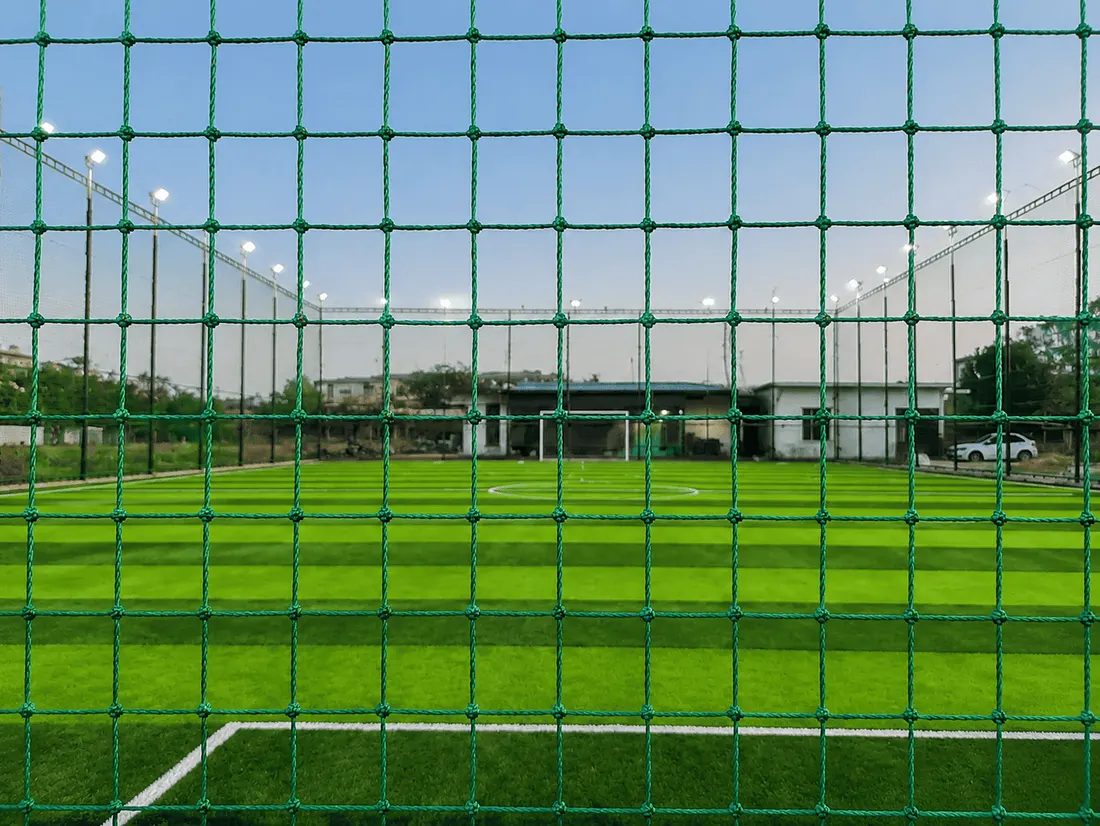 Football
/ Perfect for cricket
Cricket needs a tighter weave, so we use the 40 mm mesh, a smaller opening that a hard-hit ball can’t slip through, containing the ball inside the ground and protecting people and property beyond the boundary. Side nets run the perimeter; the 1.6 mm top net closes off practice cages and nets overhead.
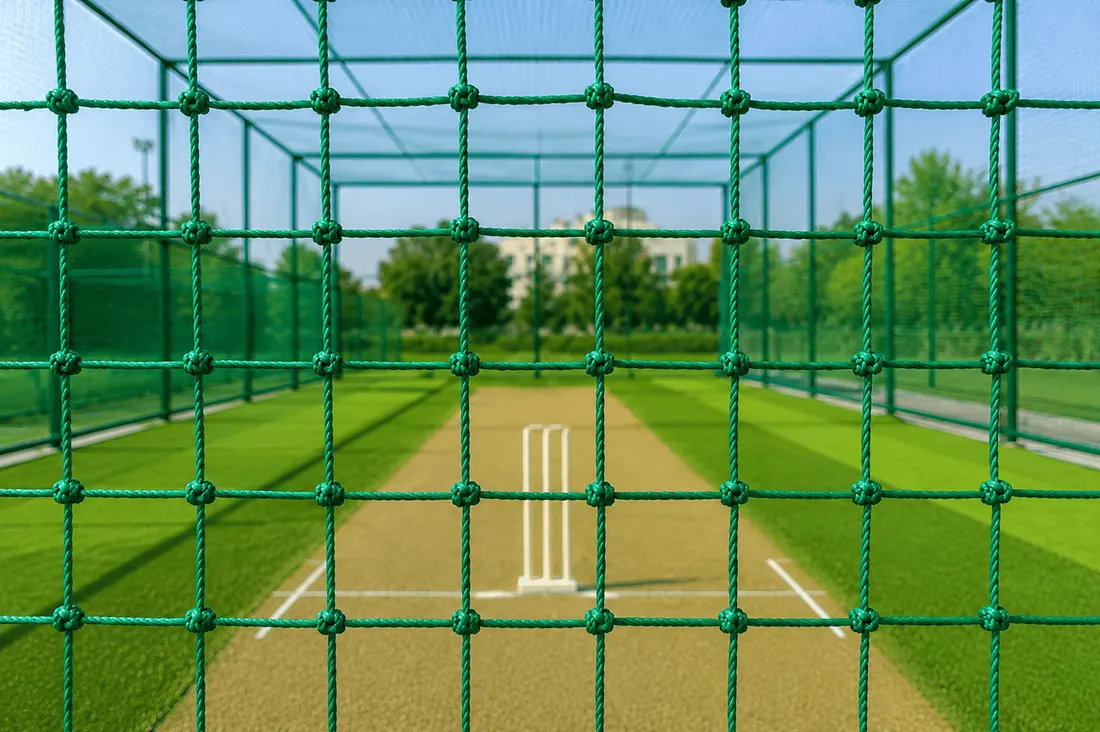 Cricket
/ New generation
The newer generation of sports netting, no knots at the mesh junctions, so the net is smoother, more uniform and snag-resistant. 3 mm side nets and lighter 1.6 mm overhead top nets, in 50 mm (football) and 40 mm (cricket) mesh.
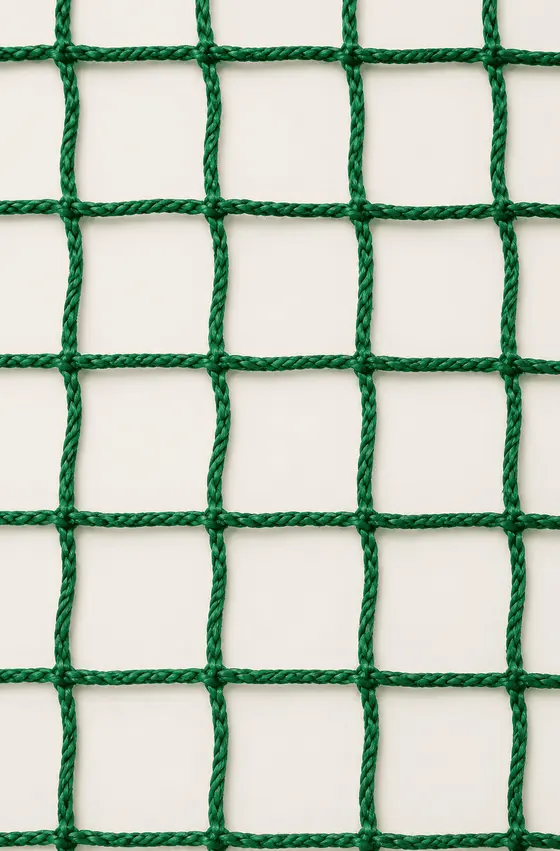
Side / boundary net, perimeter containment around a football pitch.
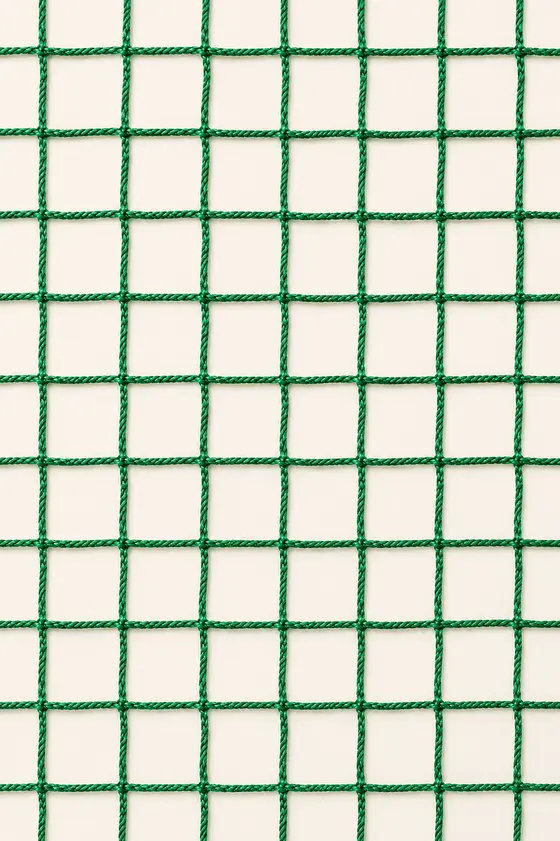
Side / boundary net, the tighter 40 mm mesh stops the ball slipping out of a cricket ground.
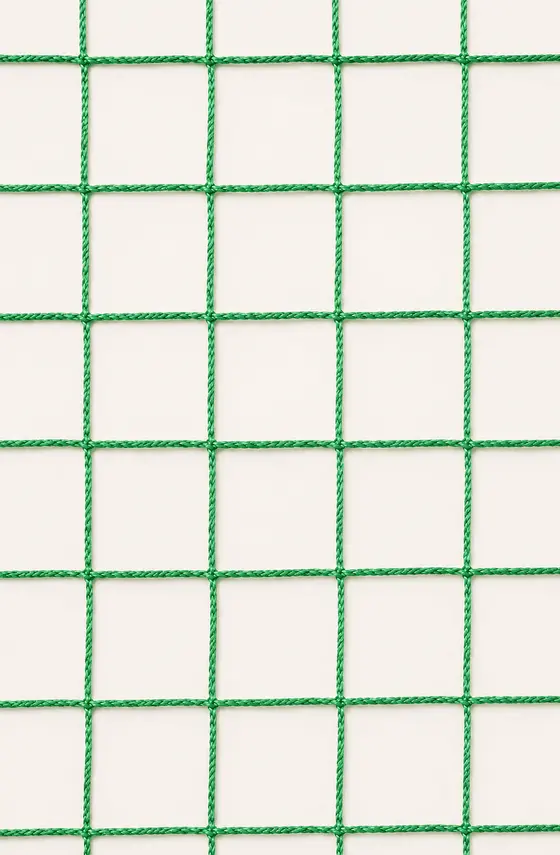
Overhead top net, canopy protection above a football pitch.
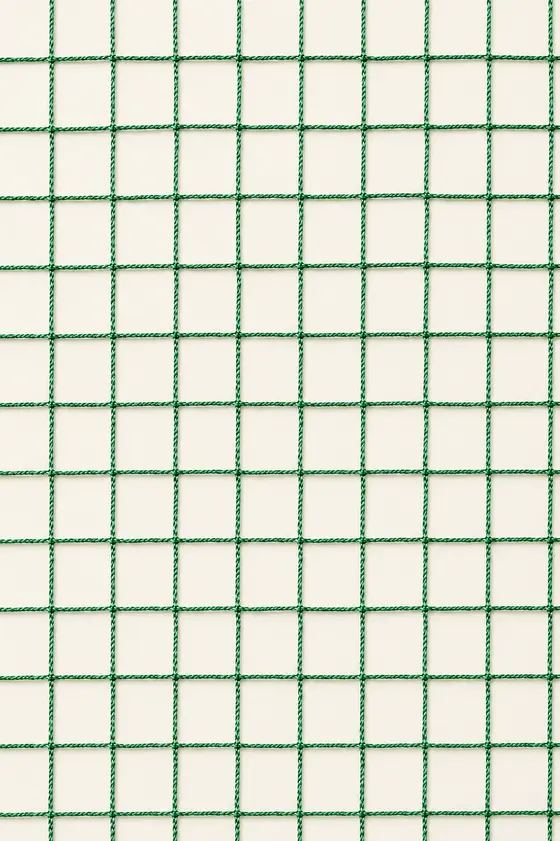
Overhead top net, 40 mm mesh keeps hard-hit cricket balls inside the ground.
/ Proven for years
The traditional braided net that has been trusted on grounds for many years, a robust 2.5 mm cord side net, in 40 mm mesh for cricket and 50 mm mesh for football.
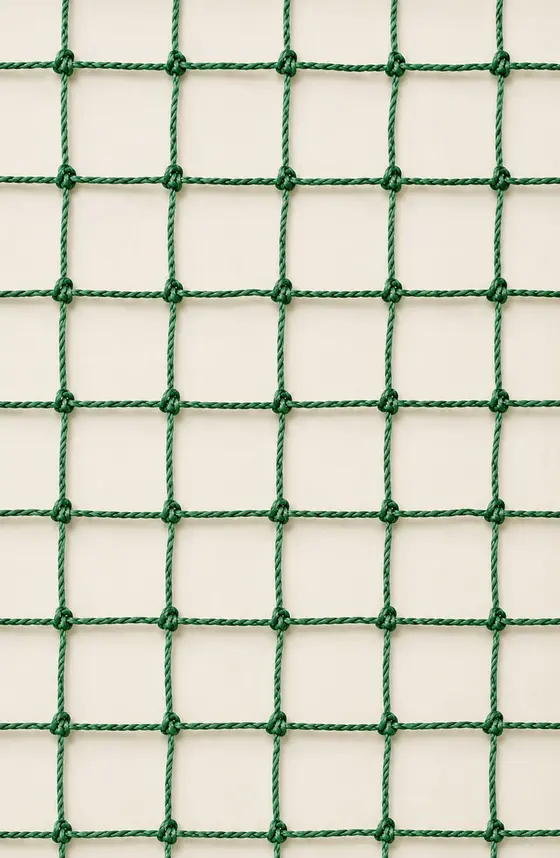
Side / boundary net, the tighter 40 mm mesh stops the ball slipping out of a cricket ground.
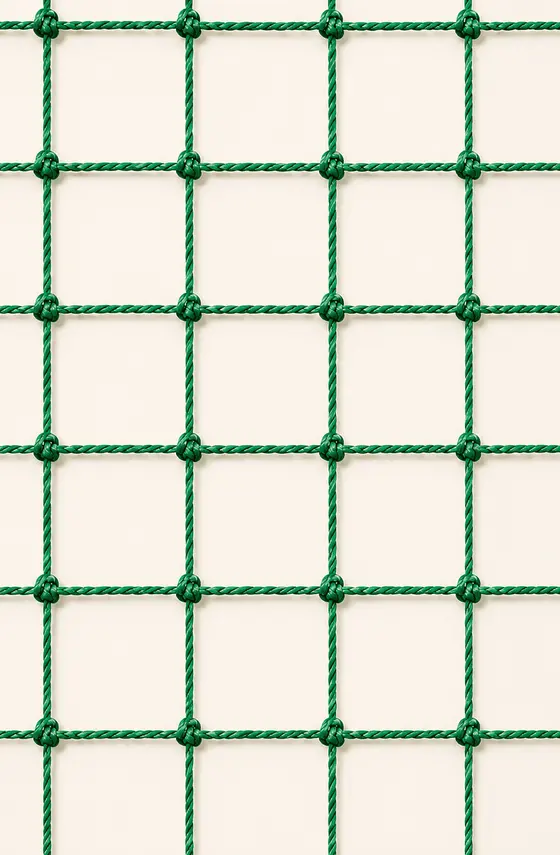
Side / boundary net, perimeter containment around a football pitch.
/ Where nets go
/ Which to choose
The newer technology, knot-free junctions give a smoother, more uniform mesh that resists snagging and abrasion. Our recommendation for new installations, in both side and overhead top-net roles.
The braided net has been on the market for many years and remains a dependable, cost-effective choice for perimeter and side netting where a proven, familiar build is preferred.
Netting fails at the fixings and the edges long before the mesh gives out. Check those and a net lasts.
Walk the perimeter and check tension. A slack net takes impact badly and wears at the contact points.
Inspect fixings, eyelets, ties and the border rope, these are where failure starts, not in the mesh.
Check for tears, displaced posts and loosened ties before the net is used again.
Small tears are repaired in place. Panels can be replaced individually rather than replacing a full run.
Related surfaces
Documentation & company
Tell us the sport and the role, we’ll match the cord and mesh and quote it turnkey.